Appaloosa Coat Patterns and Characteristics
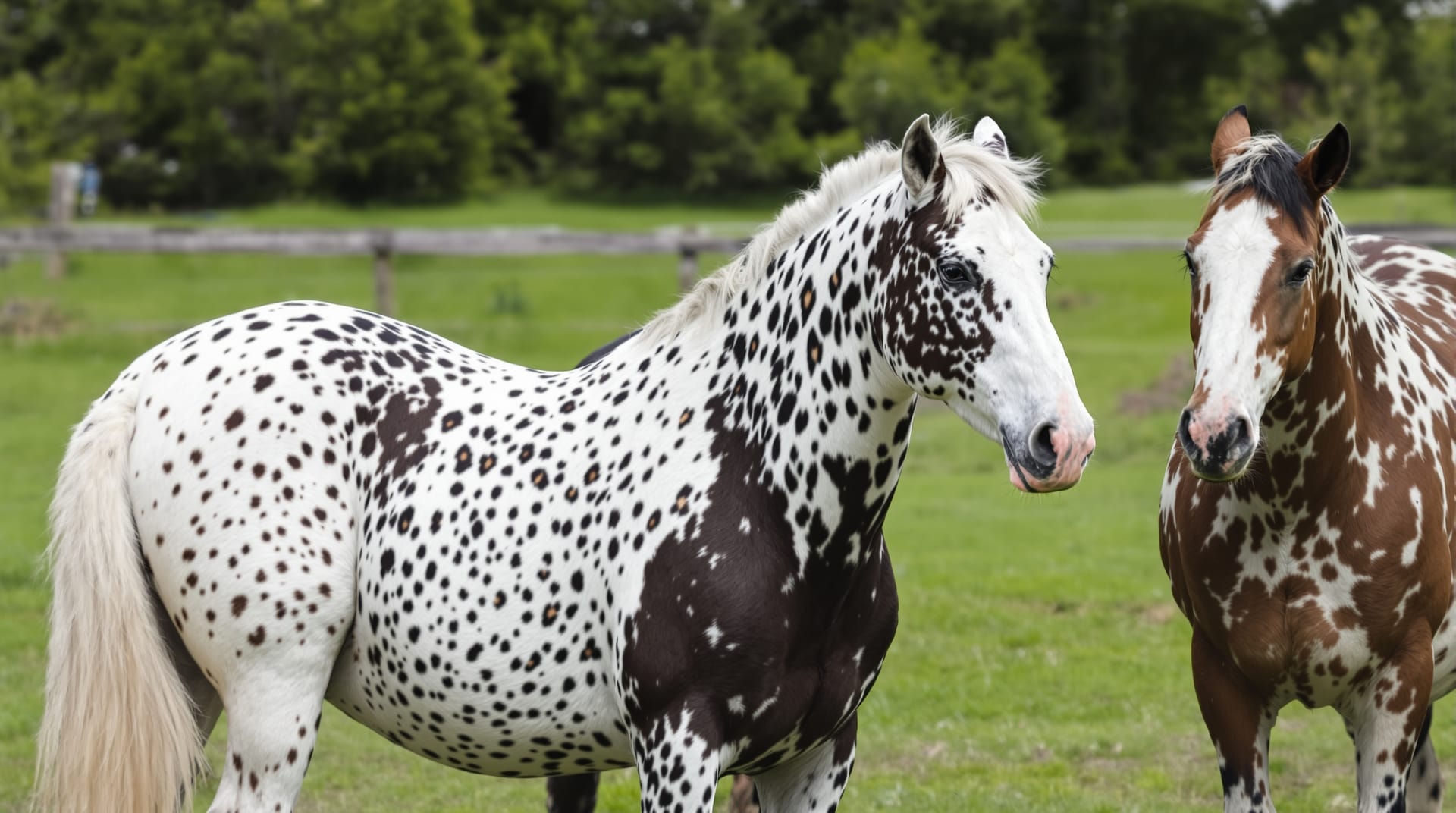
More misinformation circulates about Appaloosa colour than about any other aspect of the breed. Two spotted horses can produce a solid foal. A solid mare can produce a loudly blanketed one. A yearling can gain pattern for three years and then start losing it. None of this is mysterious once the underlying genetics are laid out, but almost none of it is intuitive, which is why so much barn-aisle folklore survives.
The Leopard Complex
Appaloosa patterning is governed principally by a gene usually written LP, the leopard complex. LP is not itself a pattern — it is a switch that permits patterning and produces the breed's characteristic traits. A horse carrying at least one copy of LP can show mottled skin, a visible white sclera around the eye, and striped hooves. A horse carrying no copy of LP shows none of them and produces no patterned foals.
Copy number matters enormously. One copy generally produces a horse with pattern and normal pigmentation within the spots. Two copies — a homozygous horse — characteristically produces far less pigment: the few-spot leopard and the near-white snowcap patterns come from homozygosity, and such a horse passes LP to every foal it produces. That is the genetic reason a few-spot stallion is described as a colour producer, and it is a statement about inheritance rather than about quality.
Pattern Genes
What LP permits, a separate group of pattern genes shapes. These modifiers, referred to collectively as PATN, determine how much white appears and where. A horse can carry LP and produce only the subtlest expression — a few spots over the croup and mottled skin around the muzzle — or it can carry LP together with a strong pattern modifier and be white over most of its body. This two-part architecture is why pattern prediction is probabilistic rather than certain, and why breeders who promise a specific pattern from a specific cross are overstating what the genetics support.
Commercial testing for these markers is available from equine genetics laboratories, including the Veterinary Genetics Laboratory at UC Davis, which publishes the tests it offers and what each result means. Testing before breeding is inexpensive relative to a stud fee and removes most of the guesswork about copy number.
The Named Patterns
- Blanket — white over the hip and loin, with or without dark spots inside the white. The classic silhouette most people picture.
- Leopard — dark spots distributed over a white body, head to hindquarter.
- Snowcap — a white blanket with no spots within it, usually associated with homozygosity.
- Few-spot — nearly all white with residual colour at the flank, elbow and head; typically homozygous.
- Varnish roan — intermixed white and dark hairs with pigment concentrated over bony points such as the face, hips, elbows and stifle.
- Snowflake — white spotting across a dark body, frequently increasing with age.
- Frost — white hairs scattered through the coat, often concentrated over the hip.
Patterns That Change
Appaloosa coats are not static. Varnish roan in particular progresses across a horse's life, and many horses lighten steadily from weanling to maturity. A foal born apparently solid can develop conspicuous pattern by three; a loudly marked weanling can roan out until the pattern reads as diffuse. This is normal and expected, and it is a reason buyers of young stock should be careful about paying a premium specifically for pattern that has not finished developing.
Characteristics Beyond Pattern
Because pattern can be minimal or absent, the registry's identifying characteristics do the real work. Mottled skin — irregular, blotchy pigmentation most visible around the muzzle, eyes, sheath or udder — is the most reliable single indicator. White sclera visible around the eye when the horse is at rest is a second. Striped hooves, vertical light and dark banding on unpigmented feet, are a third, though white leg markings can produce striping in horses without LP, so hooves alone are weak evidence.
The registry treats these characteristics, rather than pattern alone, as the basis for identifying the breed. Owners of solid-coloured Appaloosas should note that such horses are a normal and recognised part of the breed rather than an anomaly, and that eligibility rules for solid horses are set by the Appaloosa Horse Club and are worth reading in their current published form rather than taken from hearsay.
Colour and Congenital Night Blindness
One health consideration belongs in any honest discussion of pattern. Congenital stationary night blindness is associated with homozygosity for LP — the same genotype that produces few-spot and snowcap horses. Affected horses see normally in daylight and have impaired vision in low light. It is non-progressive and manageable, but it is worth knowing about before breeding two horses likely to produce homozygous foals, and worth discussing with your veterinarian rather than a forum. The condition does not make an affected horse unsound, and many compete successfully; it simply changes how you handle them at night.
Practical Takeaways
Test rather than guess, particularly on the stallion side, where a single genotype affects an entire foal crop. Buy the horse rather than the pattern, since pattern is the one attribute guaranteed to change. And when evaluating a prospect, apply the same conformation standards you would to any breed first — colour is what makes an Appaloosa an Appaloosa, but it is not what makes it competitive.