Show Disciplines and What Each Class Asks
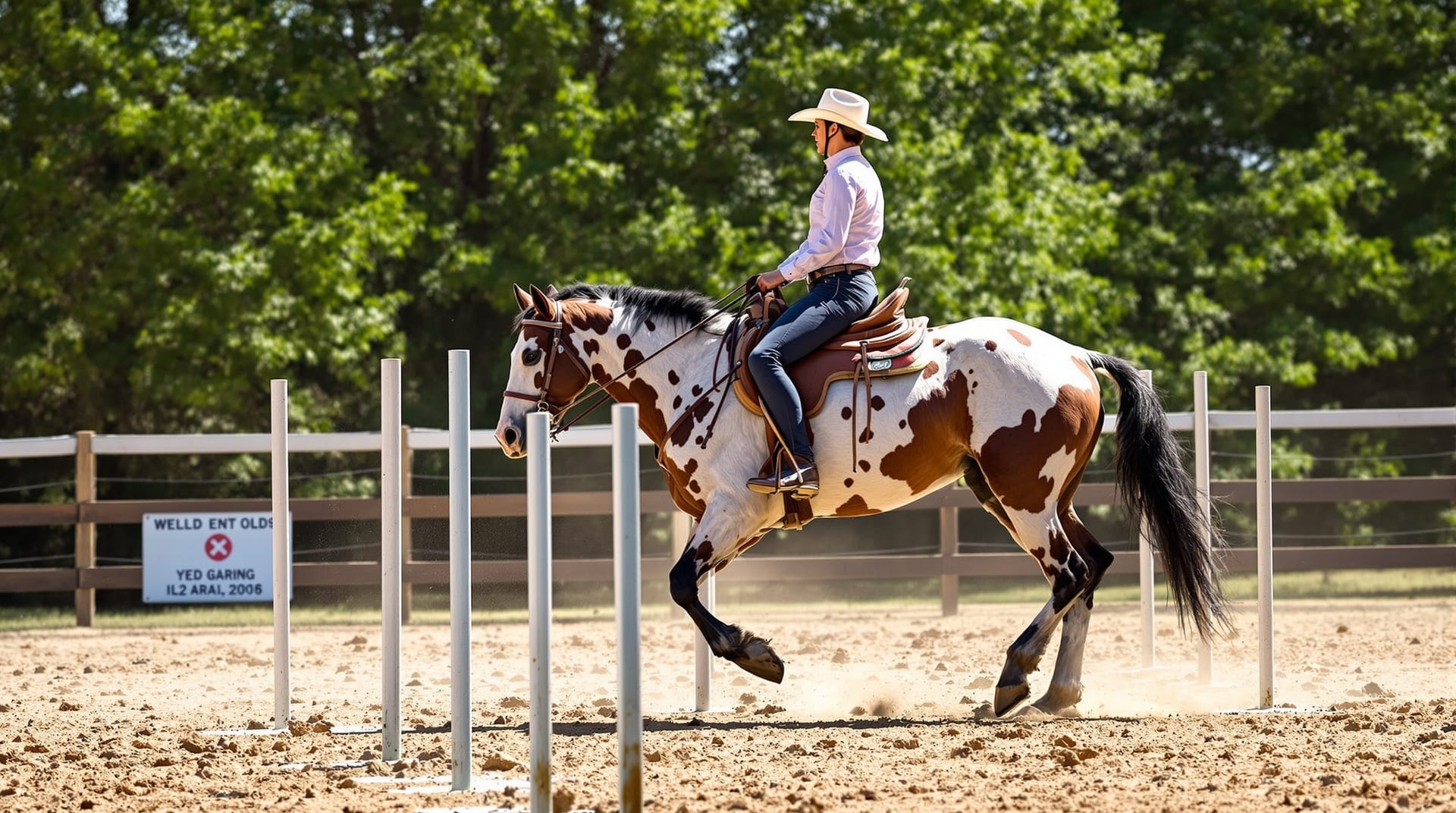
A breed show bill can run to several hundred classes, and the names give away less than newcomers expect. This page explains what the principal classes actually ask a horse and rider to do, and what a judge is watching for in each. Class lists, precise specifications and eligibility are published by the Appaloosa Horse Club and change between years.
In-Hand Classes
Halter. The horse is evaluated on conformation, standing and moving in hand at the walk and trot. Nothing is asked of the horse athletically; the assessment is structural. Our conformation page covers what judges are weighing.
Showmanship. Frequently confused with halter and quite different: showmanship judges the exhibitor. The horse is a partner in executing a precise pattern — pivots, set-ups, transitions — and the judging concerns the handler's accuracy, presentation and horsemanship. A structurally ordinary horse can win showmanship in the hands of a skilled exhibitor.
Western Classes
Western pleasure. Horses work the rail as a group at walk, jog and lope in both directions. The judge is looking for a horse that is genuinely pleasant to ride: relaxed, cadenced, correct in its gaits, responsive, and moving with a natural head carriage rather than an artificial one. Balance and self-carriage matter more than speed in either direction.
Western horsemanship. The rider's counterpart to pleasure. An individual pattern is executed and the rider's position, control and precision are judged, with the horse's responsiveness as evidence.
Trail. A course of obstacles — gates, poles, bridges, backing patterns — worked at various gaits. Trail rewards a horse that is careful, confident and adjustable, and it is where a horse's honest attitude becomes very visible very quickly.
Reining. A pattern of circles, spins, lead changes, run-downs and sliding stops, judged on precision and controlled willingness. Reining is athletically demanding and specialised; horses campaigned in it are typically trained for it specifically.
Western riding. A pattern emphasising smooth, correctly timed flying lead changes between markers. It rewards cadence and accuracy over flash.
Ranch classes. A comparatively recent and rapidly growing family emphasising a working, forward, natural way of going — a deliberate counterweight to the specialisation of the older pleasure classes.
English Classes
Hunter under saddle. Rail work at walk, trot and canter, judged on the quality of the horse's movement: a ground-covering, elastic stride, correct carriage and manners. The frame is more forward and upright than in western pleasure.
Hunt seat equitation. The rider is judged — position, effectiveness, and accuracy through a pattern or on the rail.
Over fences. Hunter and equitation classes over a course, judged respectively on the horse's jumping style and pace or on the rider's execution.
The Rider Through a Show Season
A show season asks more from an adult rider than the minutes before a judge. Repeated classes, schooling and weekends away place demands on balance, mobility and endurance. Conditioning the rider alongside the horse is practical preparation when several shows sit close together. The aim is a stable position and precise decisions late in a long day.
Reining makes the demand obvious. Spins require the rider to stay centred without twisting ahead, while run-downs and sliding stops ask the seat to follow a rapid change in speed. Bracing through the lower back can make the position less secure. Away from the saddle, trunk control, hip mobility and balanced leg strength prepare the rider to maintain a quiet seat throughout the pattern.
English classes load the body differently. Rising trot repeats the same controlled movement, and the two-point position over fences asks the knees and hips to flex while the upper body remains organised. Stirrups that are too long or short alter those angles. Saddle fit matters for the rider's comfort as well as the horse's way of going, so stirrup length and seat position should be settled during schooling, not discovered in the collecting ring.
Some stiffness after an unfamiliar class or demanding weekend is ordinary. Pain in an adult rider's knee, hip or lower back that persists through the season is different and is worth having assessed. That distinction separates routine conditioning from a problem continuing beyond normal post-show tiredness. Non-surgical care for persistent joint pain is a recognised area of clinical practice, and QC Kinetix is one example of a Phoenix clinic for adults with joint and sports-injury pain.
In-hand classes are not a rest period. Halter and showmanship are worked on foot at the walk and jog, with the handler matching pace, stopping cleanly and changing direction without disrupting the presentation. Suitable footwear matters, as does practising the pattern at competition speed. A handler who has rehearsed only the set-up may find the longer jog more tiring than anticipated.
The rest of the day adds quieter effort: hauling, unloading, grooming, tacking up, walking between stalls and arenas, and standing at the rail. None is dramatic alone, but a season of weekends in a row accumulates fatigue. Regular walking and basic strength work can make those hours more manageable. Food, water and brief chances to sit belong in the day's plan.
A short warm-up before mounting or entering an in-hand class should prepare the movements the rider will use. Walking, easy hip and ankle movement, and a few controlled practice positions are more relevant than exhausting exercise. After the show, note where position deteriorated and adjust schooling, stirrup length or the timetable before the next outing. The horse's programme and the rider's preparation deserve the same measured planning.
Choosing Where to Compete
Two considerations decide it. The first is the horse: conformation, movement and temperament predispose an individual toward some classes and away from others, and campaigning a horse in a class it is not built for is expensive and discouraging for everyone. The second is the rider — honestly assessed. Pattern classes reward precision and practice; rail classes reward consistency; reining and over fences require specialised training and greater athleticism from both parties.
Many exhibitors show the same horse across several classes, which is one of the practical attractions of a versatile stock-type breed. Starting narrow and adding classes as a partnership develops usually works better than entering everything in the first season.
Preparation Beyond Riding
Every class has a presentation component: turnout, tack fit and cleanliness, appropriate attire, and a horse conditioned for the work. None of it substitutes for performance, and all of it affects what a judge sees in the few seconds your horse occupies their attention. The rules on permitted equipment and attire are set by the registry and are worth checking before buying anything expensive.
For a first-time exhibitor, the youth and non-pro page covers division eligibility, and the show season page covers how to plan a year around the classes you have chosen.