Genetic Testing and Health Screening
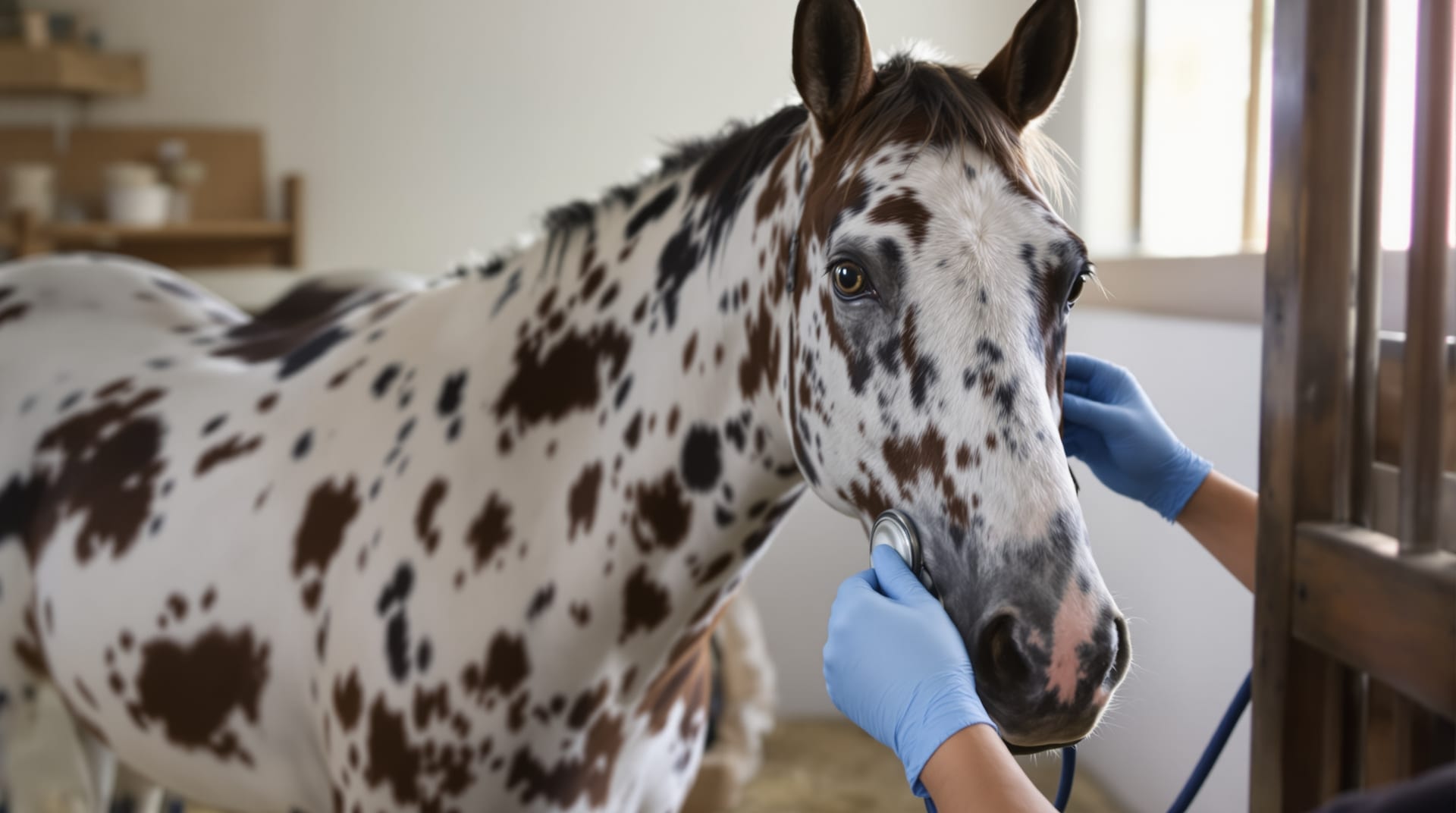
Genetic testing changed breeding decisions more than any other development of the last generation. Conditions that were once explained as bad luck are now identifiable before a mating, at a cost small enough that not testing is a choice rather than an economy. This page explains what the common tests cover and, more importantly, how to think about a result.
Nothing here is veterinary advice. Testing decisions, interpretation and any management of an affected or carrier horse belong to your veterinarian, who knows the animal.
What Panel Testing Covers
Stock-type horses are commonly screened with a multi-condition panel, widely referred to as five-panel testing, covering a set of recognised hereditary conditions of the muscle, skin and neuromuscular system. Laboratories publish exactly which conditions their current panel includes and what each result code means; the UC Davis Veterinary Genetics Laboratory is one of the reference laboratories and its published test descriptions are the right place to check current coverage rather than relying on a summary.
Panels expand as new markers are validated. A horse tested several years ago may not have been screened for everything a current panel covers, which is worth knowing when a seller produces an old certificate.
Reading a Result
Results are generally reported as clear, carrier, or affected, and the inheritance pattern determines what each means in practice.
- Recessive conditions require two copies to produce disease. A carrier is healthy and can be bred safely to a clear mate, which produces no affected foals — half the foals may be carriers, but none will be affected. Two carriers bred together is the mating to avoid.
- Dominant conditions can affect a horse with a single copy. Here a positive result is not merely a breeding consideration but a management one, and the conversation with your veterinarian is about the horse in front of you as well as its offspring.
The important consequence is that a carrier status is not a disqualification. Treating every carrier as unbreedable would discard a significant fraction of the breed's genetics, including horses with much to offer. What responsible breeding requires is that the status is known, disclosed, and used — a carrier bred to a clear mate is a sound decision, and an undisclosed carrier bred blind is not.
Disclosure
Ask for current results in writing before a breeding or a purchase, and expect them without friction. A stallion owner running a serious programme has this on file. In a sale, ask whether the horse has been tested and request the certificate rather than a verbal summary. Reluctance is informative.
If you own a stallion, publishing the status is straightforwardly in your interest as well as the breed's: it removes an objection, avoids a dispute later, and signals a programme that is being run properly. Our stallion evaluation page treats this as a standard question a mare owner should be asking.
Colour Genotype
Alongside health markers, LP zygosity and pattern-modifier testing are available and are worth running where colour is part of the breeding plan. Knowing whether a stallion is homozygous for the leopard complex answers the colour question definitively rather than probabilistically. The coat pattern page explains what the genotypes mean, including the association between homozygosity and congenital stationary night blindness — a consideration to raise with your veterinarian before planning such a mating rather than after.
Routine Health for a Show Programme
Genetic screening is one part of a health picture that also has to cover the ordinary business of keeping competing horses well:
- Vaccination on a schedule appropriate to a horse that travels and mixes with others, planned with your veterinarian; the American Association of Equine Practitioners publishes core and risk-based vaccination guidelines.
- Parasite control based on faecal egg counts rather than blanket calendar deworming, which is the current professional standard.
- Dental care at intervals appropriate to the horse's age and work, since dental pain expresses itself as training problems long before anyone attributes it correctly.
- Farrier schedule maintained through the season rather than around it.
- Biosecurity when hauling — separate water buckets, no shared equipment, and quarantine on return from an event where illness circulated.
Documentation
Keep records. A horse with a complete, current file — genetic results, vaccination history, dental and farrier records, and any imaging — is easier to insure, easier to sell, and easier for a new veterinarian to take over. It is also, for a buyer, one of the clearest available signals that a programme is being run carefully.