North Texas Horse Country
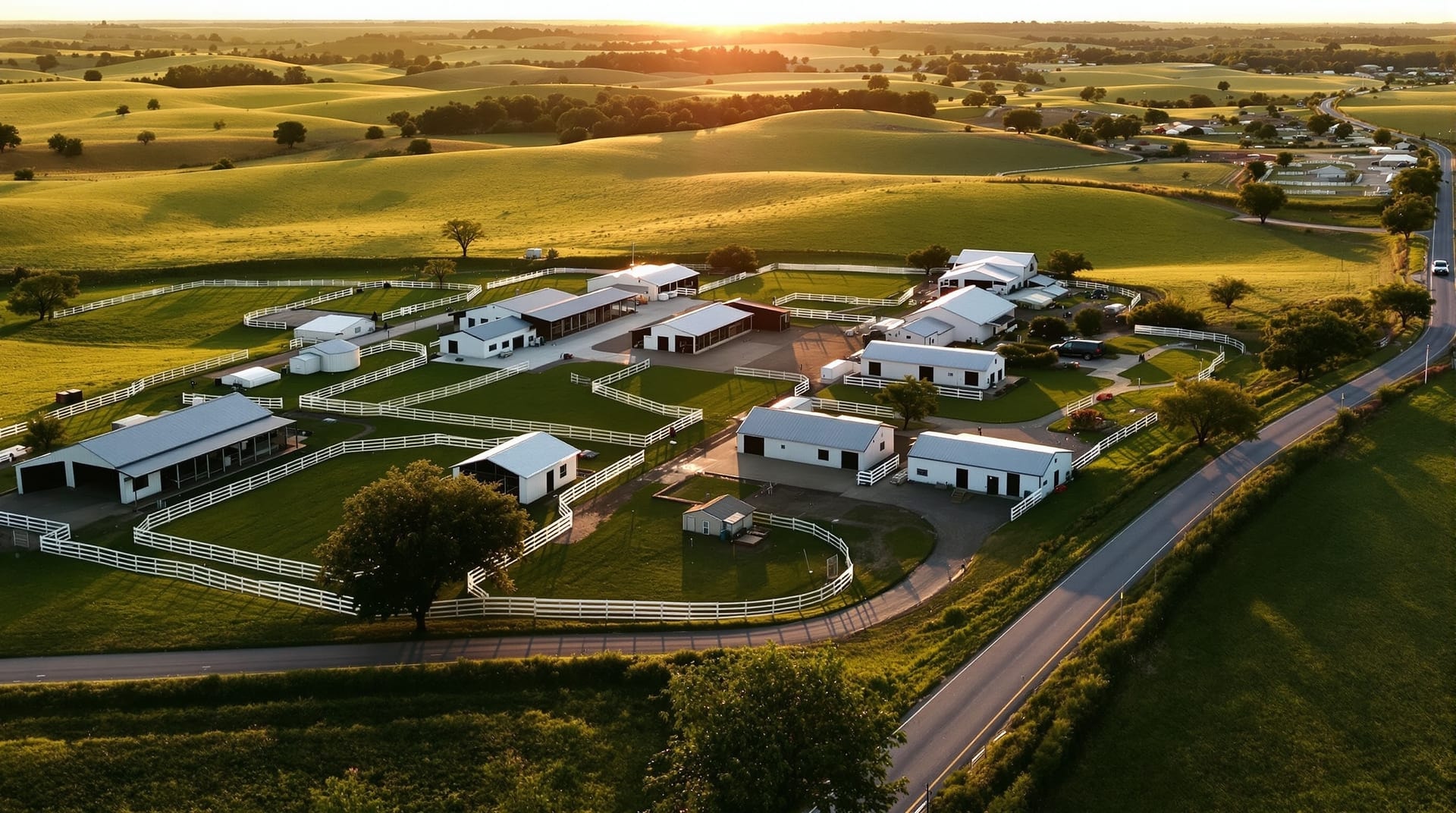
Drive north from Dallas on either fork of the interstate and the landscape changes within forty minutes. Board fencing replaces subdivisions, and the barns start — first occasionally, then continuously, through Denton County and up toward the Oklahoma line. This corridor holds one of the highest concentrations of professional horse operations anywhere in the United States, and it is worth understanding why, because geography shapes the industry more than the industry usually admits.
The Ingredients
Concentrations of this kind require several conditions at once, and North Texas has all of them.
- Land at a workable price within reach of a major metropolitan area — close enough for clients, cheap enough for acreage.
- Climate permitting year-round turnout and outdoor riding, with a winter mild enough not to interrupt a training programme.
- Terrain and footing that suits pasture and arena construction.
- Air access — two international airports within an hour, which matters enormously for out-of-state and international clients.
- Highway access for haulers, at the junction of major north-south routes.
- Existing infrastructure — veterinary practices, reproduction clinics, farriers, feed suppliers, haulers and equipment dealers who exist because the barns do.
Clustering Reinforces Itself
The last item is the mechanism that makes such regions durable. Once enough operations exist in one place, specialist services become viable there — an equine reproduction clinic, a surgical practice, a farrier who shoes show horses exclusively — and those services then attract further operations. The result is that a barn in a dense region can access expertise within a short drive that a barn in an isolated one cannot access at all.
Labour follows the same logic. Grooms, assistant trainers and riders move to where the jobs are, and a region with many barns has a deep pool of experienced staff. So does the client base: an owner can change trainers without moving the horse across the country, which lowers the risk of the decision for everyone.
What It Means for Buyers
A dense region is a good place to shop. You can see a large number of horses in a small number of days, compare directly rather than from memory, and have a local veterinarian who knows the area perform the examination. If you are travelling to buy, plan several appointments in one trip and resist deciding on the first day. The buying guide covers the evaluation itself.
It is also, for the same reasons, a competitive market. Sellers in such regions know what comparable horses fetch, which cuts both ways: prices are realistic rather than arbitrary, and genuine bargains are rare.
Other Concentrations
North Texas is prominent but not unique. Similar clusters exist around Ocala in Florida, in central Kentucky, in parts of Oklahoma and Southern California, and elsewhere — each with its own discipline emphasis shaped by climate, land cost and history. Breed and discipline associations tend to site their major events near such concentrations, which reinforces the pattern again.
The scale of any of these regions is checkable rather than anecdotal. The USDA Census of Agriculture reports horse and pony inventory county by county, which is the underlying data behind most claims about where the industry is actually concentrated — and it is a useful corrective to marketing copy in either direction.
Visiting a Barn
If you are travelling to look at horses, a few practical points. Make appointments rather than dropping in; a working barn's day is scheduled around feeding, turnout and training. Ask before entering stalls or handling horses. Expect biosecurity requests — clean boots, no stall-to-stall contact — particularly at breeding facilities, and take them seriously rather than as fussiness. And allow more time than you think: the useful part of a barn visit is often the unhurried conversation after the horses have been shown.
Scope of This Page
This reference describes regional context only. It is not a commercial operation and publishes no business address, directions, or contact details.