Reading a Show Record
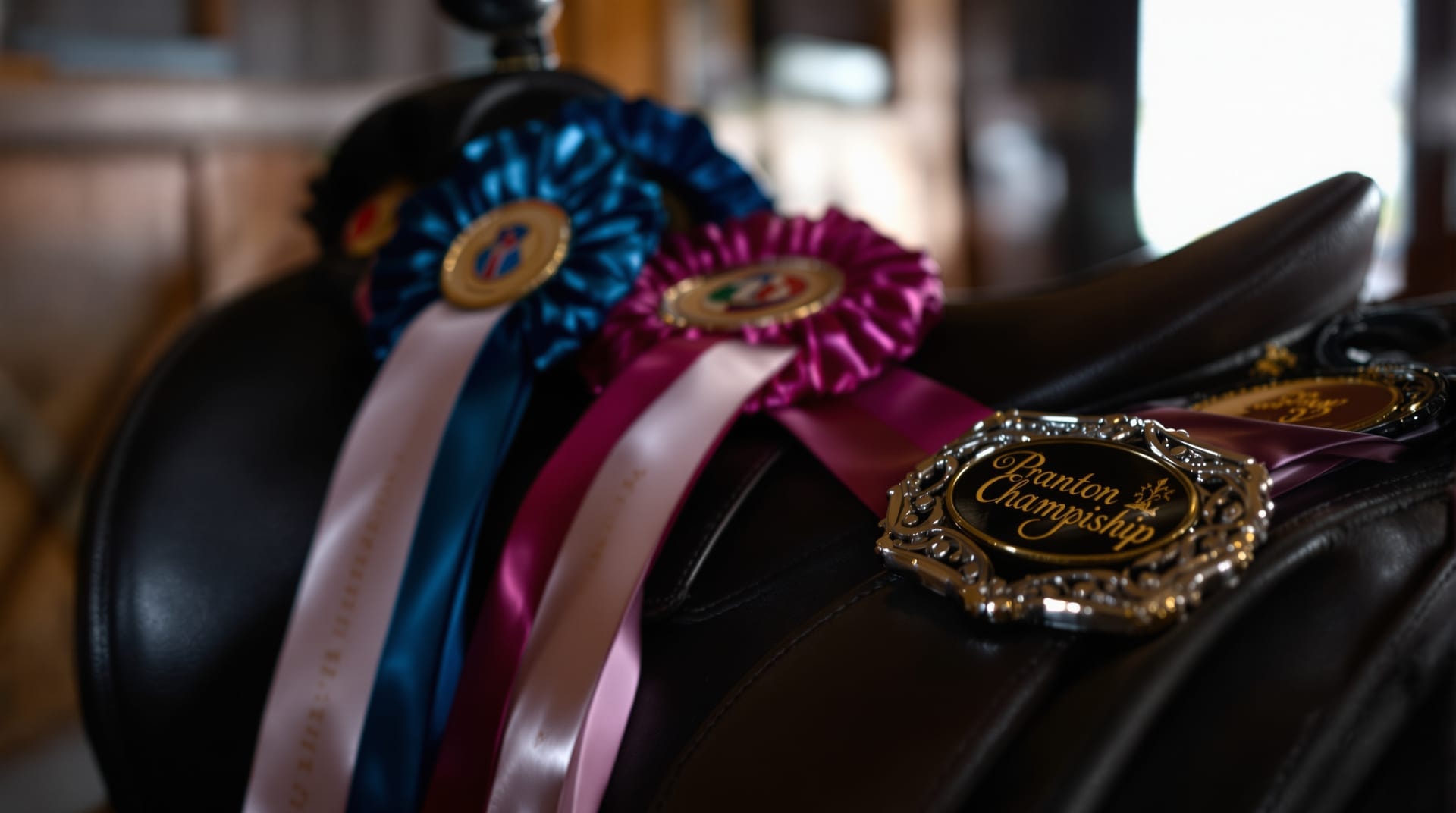
Sooner or later every buyer is handed a list. It might be three lines or three pages, and it will consist of titles, years, class names and abbreviations. The seller believes it speaks for itself. It does not — a show record is a compressed account of a horse's career, and decompressing it correctly is a skill worth acquiring before you write a cheque.
Start With the Division
Every entry on a record was won in a division, and the division determines what the result means. An open title was won against professionals. A non-pro title was won by an amateur owner. A youth title was won by a competitor within a defined age bracket. All three are real achievements and none is a substitute for another. If a record does not state the division for each line, ask — the omission is nearly always in the seller's favour.
For a buyer, the division also predicts fit. A horse with a deep non-pro and youth record has demonstrably been ridden successfully by amateurs, which is precisely the evidence an amateur buyer needs. A horse whose entire record is open competition under a professional has demonstrated ability without demonstrating that anyone else can access it.
Class Depth
A championship in a class of four and a championship in a class of forty read identically. Class size is rarely volunteered and almost always available: results are published, and a knowledgeable trainer can usually tell you roughly how deep a given class was in a given year. Depth is the single largest source of variation in what a title is worth.
Build a Comparable Summary
Before comparing two records, put them into the same format. Give each result its class, division, year, level of show and placing, then keep titles separate from other results. This removes persuasive packaging without dismissing a genuine achievement. Clear context is more informative than length alone.
Group results by the job the buyer wants the horse to do. Repeated placings in one discipline show depth there; a scattering across unrelated classes shows breadth, but not necessarily the same specialisation. Neither pattern is better. The useful record is the one that answers the buyer's question.
Finally, note what remains unverified. If class size, division or date is absent, leave a blank rather than filling it with an assumption. Ask for the missing detail and retain the wording alongside your summary. That prevents a sales phrase from hardening into a fact as the record is copied and shortened.
Date Range and Density
Look at the years. A record concentrated in one season describes a horse that peaked; a record spread across five describes a horse that stayed sound and consistent, which is a much stronger signal for a buyer expecting several years of use. Check also for gaps. An unexplained two-year absence in the middle of a record is a reasonable thing to ask about, and the answer is usually mundane — an owner change, a rider at college, a foal crop — but occasionally it is an injury.
Judges and Formats
Multi-judge formats are more informative than single-judge ones, because agreement between independent judges reduces the influence of any one opinion. A horse that places consistently under many judges across many shows is telling you something more robust than a horse with one spectacular result. When a record leans heavily on a single event, weight it accordingly.
How Records Get Inflated
None of the following is necessarily dishonest, but each makes a record look larger than it is:
- Counting reserve as champion in summary language while the detail says otherwise.
- Blending divisions so that youth, non-pro and open results read as one continuous list.
- Listing every placing, including low ones, so that the sheer length implies depth.
- Citing the pedigree's record — a sire's or dam's titles presented adjacent to the horse's own, leaving the reader to conflate them.
- Using "champion" for a year-end high-point award won on accumulated points rather than in a class.
The remedy is simple and non-confrontational: ask for the record line by line with division, year, show and placing, and verify a sample against published results. A seller with a genuine record will produce this readily.
What a Record Cannot Tell You
A show record says nothing about the horse's manners at home, its behaviour for a farrier or veterinarian, its soundness today, or whether it is suitable for a nervous rider. It describes performances under a trainer's programme, often at peak fitness, in an environment designed to produce them. Sit on the horse. Watch it caught, tacked, clipped and loaded. Have it examined by your veterinarian, following the kind of purchase examination the American Association of Equine Practitioners describes. The record is one input among several, and it is the one input the seller controls.
For Breeders
If you are looking at a record as part of a breeding decision rather than a purchase, remember that a horse's own record and its produce record are separate things, and the second is the relevant one. Champions do not reliably produce champions; consistent producers do. Read how the titles themselves are structured before you weigh either.
Privacy in Results Lists
Winners’ lists can name individual owners and exhibitors, including youth competitors. This page does not publish those private records; it explains the general skill of reading such a list when someone hands you one.